

Ilford Delta 100 is everything they say it is! Let's try it out with the Pentax K1000 Film Camera3/9/2024
I would have expected this film to be more costly than it actually is, especially compared to other 'professional' films like Kodak Portra 160, 400 and 800 in either 35mm and 120 formats.
But to the contrary, as of this article, I can buy it locally for about $8.50 US, while Kodak Portra 160 is over $12. Even Ilford's own sister-black and white 'consumer grade' film FP4 is only .50 cents per roll less than the Delta 100. What the manufacturer says: “Delta 100, medium speed, exceptionally fine grain, black & white film. Ideal for uncompromising image makers who want to capture maximum detail and sharpness."
0 Comments
I take my Minolta SRT101 into an urban area of Indianapolis, Indiana with a roll of black and white AristaEDU 200 film that I hand developed at home after the shoot.
I also use a 28-80mm Minolta lens, as I find the flexibility of a zoom in urban areas worth the potential loss of glass quality. It's film people, who cares how 'perfect' it is!? One of my most enjoyable experiences with photography usually comes from film, although I enjoy and work a lot with digital, it's the film process/developing/scanning that I find very fulfilling.
I purchased this Nikon FM10 on Ebay, along with the Nikkor 35-70mm zoom lens that proved to be fairly sharp and accurate in reading the exposure. Even though I purchased on Ebay from an individual, I was lucky to get a very nice, well maintained camera. Although there were a couple of lines from a magic marker scribbled on focus screen for some reason, it does not show up in photos. The Nikon FM10 takes two (2) LR144 batteries, which are easily available at most camera shops and online.
Unlike black and white film, I don't develop color c-41 process, but I am fortunate to have a lab within 30 minutes that develops color film for $5 per roll, and offers 72dpi scans for an additional $5. For this roll of Kodak Gold 200 35mm, I decided to forego the scans, and do those myself on my recently purchased Epson V600. I was very happy with the way all steps of the process turned out, from the framing, developing, scanning and final image, these turned out to be very nice images.
My second roll of film through my Minolta Maxxum 3xi was my first roll of Arista EDU Ultra 100 (36 exp) black and white. Since I know from my first shoot with this camera in Franklin, Indiana a few weeks earlier that the camera and lens function well together, and seem to both focus and read exposure well, I was confident it would not be a waste of time taking the Minolta 3xi downtown, where I ask people if I can take their portrait while passing them on the street.
It was mid-day in downtown Indianapolis, so the sun was high and harsh, but that added to the contrast of the film. During the times of covid, the best time to capture people out and about in an inner city is typically going to be lunch time. As more things open up, evenings become more of an option. But from where I am, the evenings are the leanest times regarding people out and about in the downtown area.
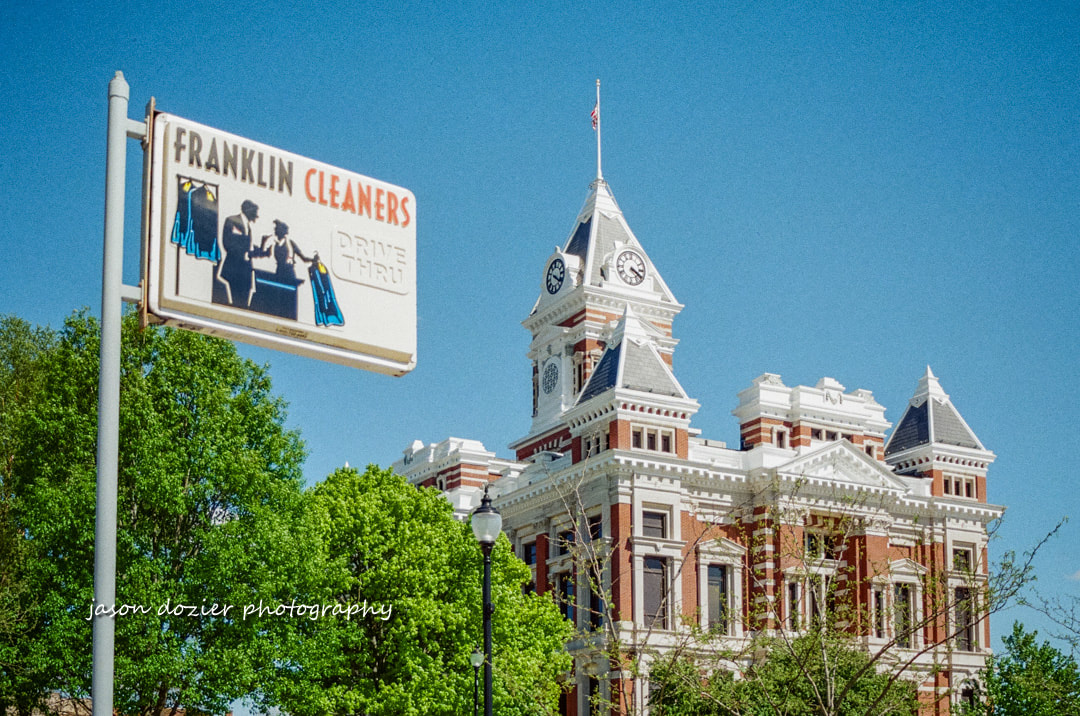
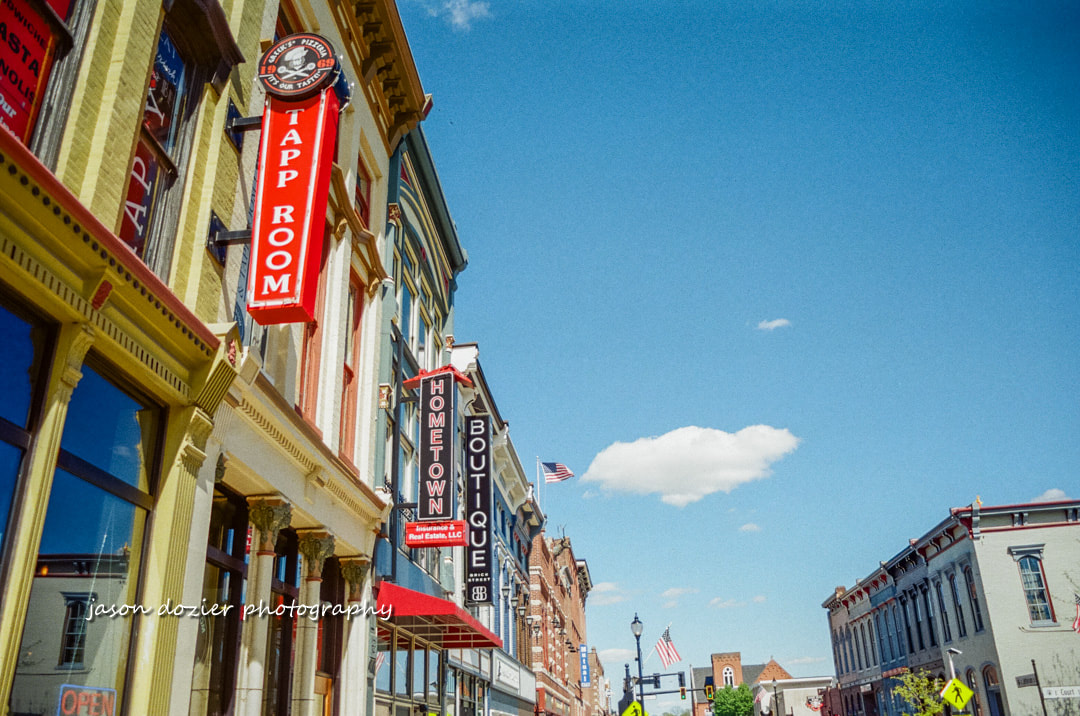
I took the Minolta Maxxum 3xi 35mm film camera ($18 body-only) to a small town near me to test it out with a roll of 24 exposure Kodak UltraMax 400 35mm film. The city of Franklin, where I tested the camera and film, is a thriving little town just south of Indianapolis, and offers a lot of shooting opportunities within the one-block town square. Added to the camera was a Minolta 28-80mm lens that I purchased for $20, but can use on many different Minolta camera bodies. (read more by click link below ...)
-- Minolta 28-80mm f/3.5-5.6 Lens - $20
The lens was fairly quick to catch focus and for the most part I have no problem with it, which is good because the purpose of buying it was to be able to test with future Minolta AF mount film cameras for this series. I've already purchased a Minolta Maxxum 300si that came with a 35-70mm lens, but I do not like the lens, so when I test that in future weeks, it'll be with this decent little 28-80mm. |
Categories
All
Archives
March 2024
|
















 RSS Feed